


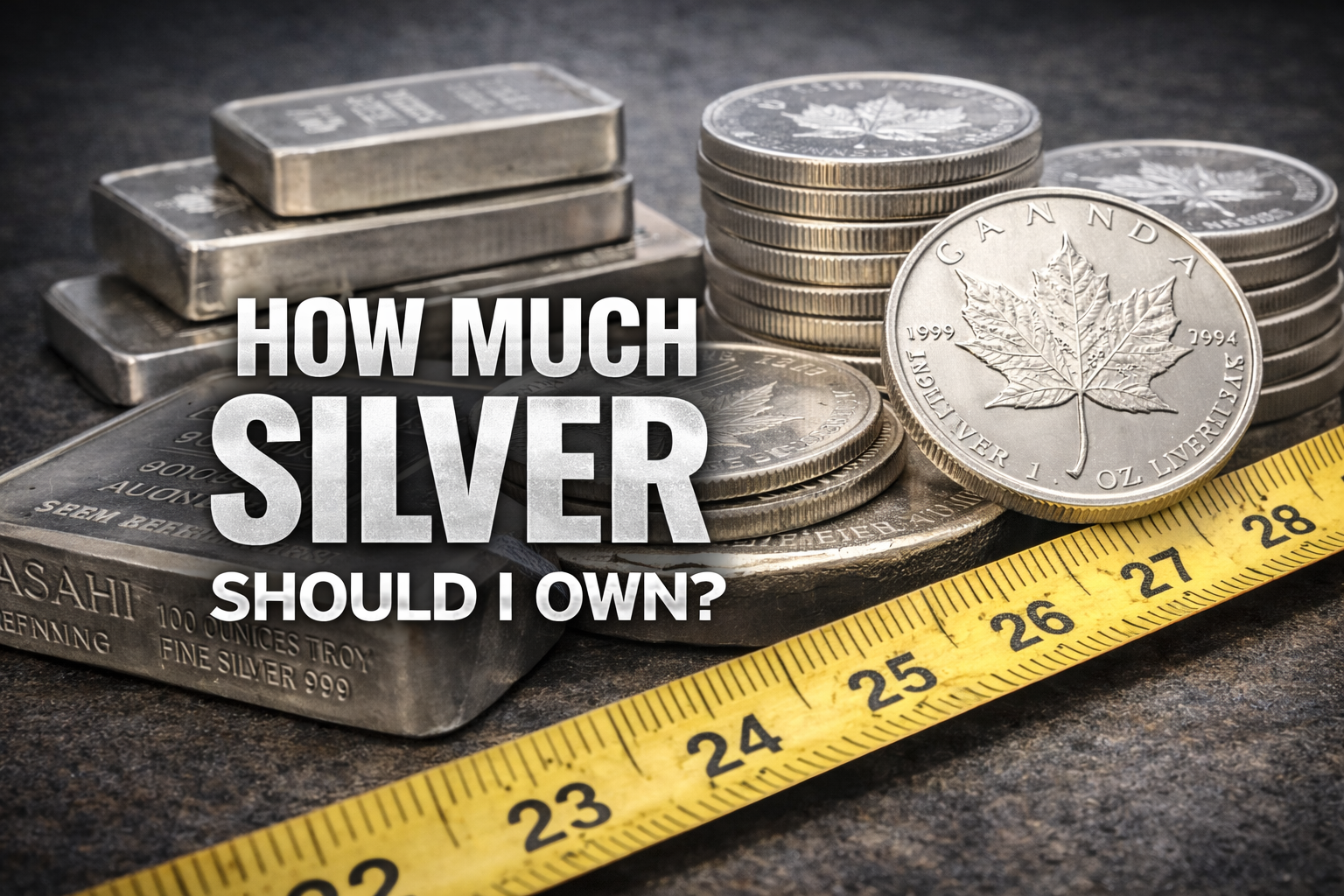
I hear this one constantly. How much silver should I own? And every article out there gives you some version of “5 to 15 percent of your portfolio” like that number means anything without context. It does not. It is a lazy answer to a question that deserves a real one.
The truth is the right amount of silver for you depends on things no article can calculate. Your income. Your expenses. Your risk tolerance. How you feel about the broader economy. What else you own. How much room you have to store it. Whether you see this as a short term trade or a generational hold. All of those things matter and they are different for everyone.
So instead of giving you a number I am going to walk you through how I think about it and what I have seen work for people over the years.
The Old Playbook Is Breaking
For decades the standard portfolio model was 60/40. Sixty percent stocks, forty percent bonds. That was the safe, diversified, do not think about it too much approach. And for a long time it worked well enough.
I do not think that model holds up anymore. Not in the world we are heading into.
Bonds are not offering the safety they used to. Yields have been all over the place. Government debt is exploding in Canada, the US, and basically everywhere else. Inflation has not been tamed despite what the headlines say. And the purchasing power of the dollar keeps eroding year after year.
I think portfolios going forward are going to need to be heavier in real assets. Commodities. Energy. Precious metals. Things that hold value when currencies do not. I am not saying stocks and bonds are dead. I am saying the old allocation does not reflect the world we are actually living in. And silver fits into that shift in a big way.
Why How Much Silver You Own Matters More Right Now
This is the part that matters most when you are asking how much silver should I own. If you believe like I do that we are in the early to middle stages of a 10 to 20 year commodity and metals super cycle, then the amount of silver you should hold is probably more than whatever generic percentage someone on the internet told you.
Underinvestment in mining. Central banks buying gold hand over fist. Currencies losing purchasing power every year. That is what drives these cycles. And none of it is slowing down.
Silver in particular benefits from both sides. It is a monetary metal and an industrial metal. Solar demand alone is eating up record amounts of silver every year and that trend is just getting started. Supply deficits have been running for years now. The setup for a long move higher is sitting right there. Not in a straight line obviously. We just lived through a 34 percent drop and the world did not end. That is normal in a bull market.
But if the cycle thesis is right, then the question is not really how much silver should I own. It is how much can I accumulate while prices are still relatively accessible.
What I Actually See People Doing
Most first time buyers start with somewhere between $1,000 and $5,000. A tube of Maple Leafs, maybe a couple 10 oz bars. That is a solid starting point. It gets you familiar with the product, the process, and how the price moves.
From there a lot of our regular customers settle into a rhythm. They buy a set amount every month or every quarter. Maybe $500, maybe $2,000. Depends on the budget. The consistency matters more than the size. I wrote about this approach in my post on dollar cost averaging into gold and silver and I genuinely believe it is the smartest way to build a position over time. You stop worrying about timing and just accumulate.
The people who have been doing this for a few years now own anywhere from a couple hundred ounces to over a thousand. Some of them started mixing in gold along the way to hold more value in less space. That is a natural progression and I talked about when to make that shift in my silver vs gold post.
But Silver Gets Heavy
At some point silver takes up a lot of room. A 100 oz bar weighs about 6.8 pounds. Five of those and you have over 30 pounds of metal sitting somewhere. That is a real thing you have to deal with.
When people hit that point they usually do one of two things. They move some of their metal into professional storage or they start shifting new purchases toward gold where the same dollar value takes up a fraction of the space.
There is no shame in either approach. Just be practical about it. If you are losing sleep over where to keep your silver or how to secure it, you probably need to rethink the format more than the amount.
There Is No Perfect Number
Anybody who tells you to hold exactly X ounces or exactly X percent is making it up. What matters is that you have a reason for owning silver, a plan for how you are building your position, and the discipline to stick with it over time.
If you believe the macro environment is shifting toward real assets then start accumulating. Do it consistently. Do it within your budget. And do not get hung up on whether 100 ounces is enough or 500 is too much. The people I see do best with this are the ones who just keep buying and do not overthink it.
If you are new to this, buy a tube of Silver Maple Leafs. That is 25 ounces. Hold it. Watch the price move around. Get comfortable with owning physical metal. Then set a monthly budget you can sustain and start dollar cost averaging. Even $200 a month adds up faster than people expect. In a year that is over 20 ounces depending on where prices are. In five years you have a real position.
Browse our silver bars and silver coins and pick what fits. If you want to talk through a plan we are here.


Leave a Reply