


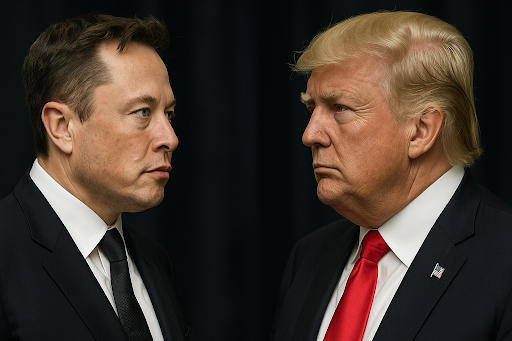
What if the public fallout between two of the world’s most powerful figures, Donald Trump and Elon Musk, were not what they seem? What if, instead of a genuine rivalry, we are witnessing a masterfully orchestrated piece of political theatre? This may sound like a conspiracy theory, but consider this: what if their conflict is a calculated strategy to rally mainstream support from the public and Congress to make radical changes in government, all with the ultimate goal of slashing government spending and restoring fiscal sanity? It’s a bold theory, but the pieces fit together more neatly than you might expect.
The Grand Strategy: A New Political Force
The core of this strategy revolves around the creation of a new political party. This wouldn’t be just another fringe movement; it would be a party designed to appeal directly to the politically homeless center and the broader public, united by a single, powerful message: it’s time for a balanced budget and common-sense government. By demonstrating widespread support for fiscal responsibility, this party could prove to the political establishment that the will of the people is to rein in out-of-control government spending.
Furthermore, this new party could serve as a powerful bargaining chip. Elon Musk, with his immense public platform and resources, could offer to disband the party entirely if the existing political powers commit to meaningful and lasting reductions in government spending. It’s a high-stakes game of political leverage, designed to force the hand of those who would rather maintain the status quo.
The Trump-Musk Connection: More Than Meets the Eye?
The idea of a staged feud might seem far-fetched, but it’s a tactic that Trump has used before. One notable example is his highly publicized conflict with Fox News anchor Megyn Kelly during the 2016 Republican primary campaign. Their clash began after a contentious exchange during the first GOP debate, where Kelly questioned Trump about his past derogatory remarks about women. The feud dominated headlines for weeks, with Trump repeatedly attacking Kelly on social media and in interviews. However, as Megyn Kelly later revealed, “it was never personal.” She recounted, “The last thing he said to me before I walked out of his office was, ‘You know, Megyn, if they’re not talking about us, that’s not such a good thing.’ It was the first time it really dawned on me that this actually wasn’t about me. It was about the campaign, it was about the presidency, it was about the White House, it was about the win.” This reveals a playbook where Trump uses public conflict as a tool for a larger strategic objective.
Another clue to their potential collaboration is their shared endorsement of initiatives like the Department of Government Efficiency (DOGE). This signals a deeper mutual recognition that the current structure of federal operations is bloated and unsustainable. For Trump, who has long campaigned against government waste, aligning with Musk on streamlining and overhauling federal departments could be a quiet but telling indication that he supports bold institutional reform, but just needs the right political conditions to pursue it.
An additional layer to consider in Trump’s strategy is his talent for drawing skeptics into his orbit over time. He often allows his critics to underestimate him, only to later reverse expectations in a way that silences opposition and solidifies his base. A telling example was the public’s assumption that Trump would escalate conflict with Iran—many expected a prolonged military intervention. Instead, Trump executed a swift tactical operation and followed it with unexpected diplomatic overtures, which caught even his harshest critics off guard. This pattern of first provoking skepticism, then flipping the narrative, could be playing out again. By appearing to feud with Musk while tacitly aligning on goals, Trump may be using Musk’s influence to demonstrate the viability of a new political movement. Once it becomes clear that this movement could seriously threaten the Republican establishment, the GOP may be forced to fall in line behind Trump—just as skeptical voters and pundits have in the past.
Enter Judy Shelton: The Fed Candidate Who Champions Gold
This brings us to the most crucial part of this potential plan: the appointment of controversial figures who are willing to make the radical changes necessary to curb government spending. One such prominent name is Judy Shelton, a leading contender to be the next Chair of the Federal Reserve. As we’ve discussed in a previous article, The Shelton Effect: Why a Judy Shelton Fed Could Be Rocket Fuel for Gold, Shelton is a staunch advocate for a return to sound money, with a particular emphasis on the role of gold.
The timing of this plan is also critical. Federal Reserve Chair Jerome Powell’s term is coming to an end, and Trump will need to nominate a successor. While Judy Shelton aligns with his economic vision, her views are seen as too radical by many in the Senate, making confirmation an uphill battle under normal political conditions. This is where the Trump-Musk dynamic may come into play. If Elon Musk can rally broad public support for Shelton’s vision — or at least make it appear that there is growing momentum for sound-money policies — it could shift the Overton window just enough to give Shelton a viable path to confirmation. What might otherwise seem politically impossible could be reframed as necessary, even popular, thanks to a coordinated public campaign and the appearance of grassroots demand. In this light, the feud between Trump and Musk could serve a deeper purpose: creating the conditions necessary to justify and secure the appointment of a controversial but transformational Fed Chair.
Shelton’s Vision: A Return to Sound Money
Shelton’s pro-gold stance is not a secret. She has openly expressed her views on social media, often in direct response to Elon Musk. For instance, when Musk tweeted a picture of a Monopoly rule explaining that the bank never goes bankrupt and can simply print more money, Shelton’s response was a succinct and enthusiastic, “love it“. This interaction is a clear indication of their shared skepticism about the current fiat currency system.
Judy Shelton’s ideas are not just theoretical; she has laid out a clear plan for reintroducing a gold-backed discipline to our fiscal policy. In a recent tweet, she referenced her proposal from her 2024 book, “Good as Gold,” for the Treasury to issue gold-backed bonds. This innovative approach would discourage the government from inflating the money supply and help curb government spending.
Under Shelton’s proposal, these bonds would be redeemable in gold, creating a natural constraint on fiscal excess. The government would need to hold real gold reserves to back these bonds, and as investors purchased them, it would create a market-driven discipline, linking our nation’s fiscal credibility to a tangible asset. This is not a rigid return to the old gold standard, but a flexible, modern approach that anchors government borrowing to gold without completely stripping the Federal Reserve of its ability to manage the money supply. It’s a middle ground that promotes fiscal restraint and restores confidence in our economy.
The Golden Impact: What This Means for Your Investments
For those of us who understand the timeless value of precious metals, the implications of this are staggering. The potential appointment of a pro-gold advocate like Judy Shelton to the head of the Federal Reserve would be a seismic event for the gold market. Here’s why:
- A Fundamental Revaluation of Gold: If the U.S. even hints at re-linking the dollar to gold, it would force a global reassessment of gold’s role in the financial system. Gold would no longer be just a safe-haven asset; it would be at the very heart of monetary policy, likely leading to a significant repricing to much higher levels.
- Increased Demand: A U.S. move towards gold would likely be followed by other nations. Central banks, which are already buying gold at a record pace, would accelerate their purchases. Individual and institutional investors would flock to gold as the ultimate store of value.
- A Psychological Shift: The appointment of a known gold advocate to the most powerful position in central banking would send a clear message: the era of unlimited money printing is over. This psychological shift alone could ignite a historic rally in the price of gold.
A Calculated Endgame?
If this theory holds weight, then the Trump-Musk alliance — veiled in drama but rooted in mutual interests — is not just a sideshow, but a deliberate precursor to systemic transformation. The strategy hinges on polarization followed by convergence: Musk captures the technocratic libertarians and disillusioned centrists, while Trump commands the populist right. Their feud garners headlines while behind the scenes their cooperation lays the foundation to reshape the system entirely.
Together, they could create enough political pressure to force the government’s hand — to adopt real fiscal reforms, embrace sound money, and perhaps even legitimize gold-backed financial instruments at the federal level. If so, the future of American finance might not be printed… it might be mined.
Gold Wins Either Way
Whether the Trump-Musk feud is a calculated performance or a genuine clash of titans, one outcome appears consistent: gold stands to benefit either way.
If the feud is indeed a strategic maneuver to galvanize public support for fiscal reform — culminating in the appointment of figures like Judy Shelton who advocate linking the monetary system to gold — then it marks a turning point in U.S. financial policy. A shift toward sound money and hard asset backing would be a monumental structural victory for gold, embedding it more deeply into the monetary framework and increasing its institutional demand.
On the other hand, if the feud is not orchestrated and no serious reform materializes, then we are simply on course for more of the same: runaway government spending, unchecked money printing, and mounting debt. That path leads to higher inflation, declining confidence in fiat currency, and a growing rush by investors — from individuals to central banks— toward gold as a safe-haven asset.
Either scenario leads to the same foregone conclusion: gold’s relevance, value, and strategic importance are only increasing.
Position your portfolio for this monumental shift in global finance by exploring our premium selection of physical gold bullion today at Gold Silver Mart Canada.


Leave a Reply