


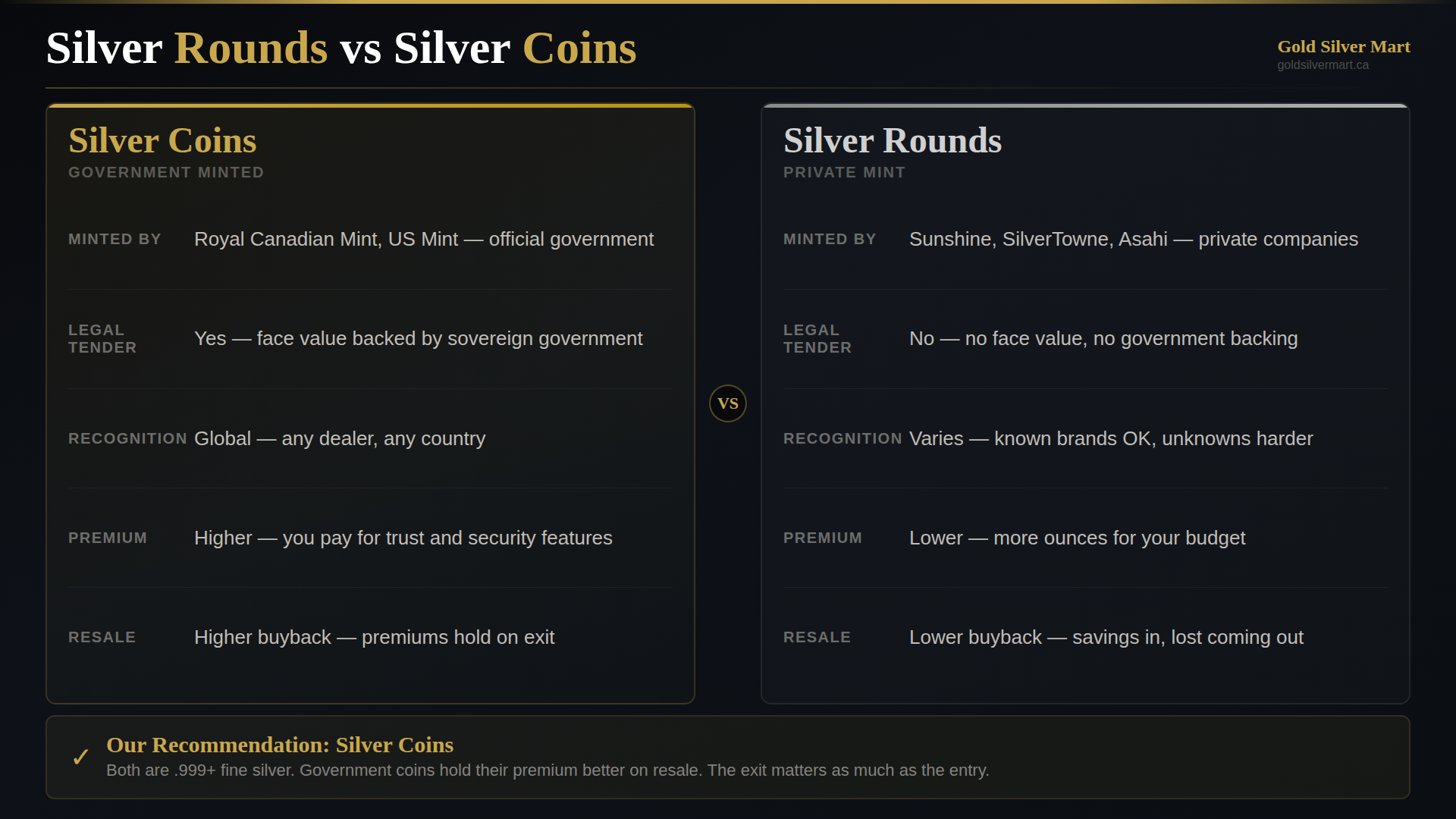
This is one of the first questions people ask when they start buying silver. They look at a Silver Maple Leaf and then they look at a Silver Buffalo Round and they cannot figure out why one costs more than the other when they are both one ounce of .999 fine silver. Same weight. Same purity. Different price. The silver rounds vs silver coins question comes down to three things. Who made it, what premium you pay going in, and what you get back when you sell. Everything else is detail.
What Makes a Coin a Coin
A silver coin is minted by an official government mint. The Canadian Silver Maple Leaf is struck by the Royal Canadian Mint. The American Silver Eagle is struck by the United States Mint. These are legal tender. They have a face value stamped on them. The Maple Leaf says $5 CAD on it even though the silver content is worth far more than that. The face value is symbolic but it matters because it means the coin is backed by a sovereign government.
That backing is what gives coins their recognition. A Silver Maple Leaf is known and trusted by every dealer in every country. You can walk into a bullion shop in Toronto, New York, London, or Singapore and sell a Maple Leaf with no questions asked. The dealer knows exactly what it is, what the purity is, and what it is worth. The Royal Canadian Mint’s security features, including the micro-engraved maple leaf privy mark on modern issues, make counterfeiting extremely difficult. That trust and recognition is part of what you are paying for when you buy a coin.
What Makes a Round a Round
A silver round looks like a coin. Same shape, same size, often the same weight and purity. But it is produced by a private mint, not a government. The Buffalo Round is a good example. It is one ounce of .999 fine silver but it is not legal tender. It does not have a face value. It was not struck by a sovereign mint.
Private mints like Sunshine Minting, SilverTowne, and Asahi produce rounds. Some of these mints have strong reputations and their rounds are widely recognized in the bullion market. An Asahi round from a well-known refiner is not going to give you problems at resale. But a round from a mint nobody has heard of might. The recognition gap between a government-minted coin and a private round is real and it shows up when you go to sell.
Silver Rounds vs Silver Coins: The Premium Difference
When people compare silver rounds vs silver coins they usually start with the premium. The premium is the amount you pay above the spot price of silver. Coins generally carry a higher premium than rounds because of the minting costs, the government backing, and the demand.
But the premium picture is not as simple as coins always costing more. Right now on our site a random year Silver Maple Leaf starts at $110.75 CAD. A Buffalo Round starts at $119.33 CAD. That is a case where the round is actually priced higher than the coin, which happens when inventory, demand, and dealer positioning create unusual spreads. Pricing shifts constantly. The point is not to memorize today’s numbers. The point is to check the actual prices at the time you are buying instead of assuming rounds are always cheaper.
In general though, across the broader market and over time, government coins tend to carry premiums a few percent higher than comparable rounds. You pay more going in. The question is what happens when you come out.
Selling Silver Rounds vs Coins: What You Get Back
This is where the rounds vs silver coins difference matters most and it is the part that new buyers usually do not think about until it is too late.
When you sell silver back to a dealer, the buyback price depends on the product. A Silver Maple Leaf or American Eagle will almost always command a higher buyback than a generic round. Dealers know those coins. They can turn them around and resell them quickly because the next buyer trusts them. A round from a lesser-known mint might get bought back closer to spot or even at a slight discount because the dealer has to verify it and might have a harder time reselling it.
That spread on resale is the hidden cost of buying rounds. You might save a few dollars per ounce on the way in but you can lose more than that on the way out. Over a stack of 50 or 100 ounces that adds up.
We recommend coins to most of our customers for this reason. If you are buying silver as an investment and you plan to sell at some point, the exit matters as much as the entry. A Silver Maple Leaf from the Royal Canadian Mint will hold its premium better on resale than almost any round on the market.
When Rounds Make Sense
That said, rounds are not a bad product. They have a place.
If budget is the main constraint and you want to accumulate as many ounces as possible for the lowest cost, rounds let you do that. You are getting the same silver content for a lower premium in most market conditions. If your strategy is purely about ounces and you plan to hold for a very long time, the resale premium difference matters less because you are betting on the underlying silver price moving significantly higher than where you bought.
Rounds also make sense if you are buying from well-known private mints with strong recognition. An Asahi round or a Sunshine Mint round is going to resell better than a round from a mint nobody has heard of. If you go the round route, stick with names that dealers recognize.
Which One We Recommend
When someone asks us about silver rounds vs silver coins, we steer them toward coins. Specifically the Silver Maple Leaf. It is .9999 fine which is actually higher purity than most other sovereign coins. It is produced by one of the most respected mints in the world. It is recognized globally. And when you come back to us to sell, we pay more for Maple Leafs than we do for rounds because we can move them faster.
If you are just starting out and you want to understand the broader case for silver, we wrote about whether silver is a good investment in Canada with our full thesis on where we think the price is headed. If you are trying to figure out how many ounces to hold, our post on how much silver you should own covers that.
If you already know what you want, browse our silver coins and rounds. Check the live silver price in CAD to see where spot is right now. And if you want help deciding what makes sense for your situation, reach out. This is a conversation we have with customers every day.


Leave a Reply